From AI Promise to Performance: Top Six B2B AI Myths to Overcome in 2026

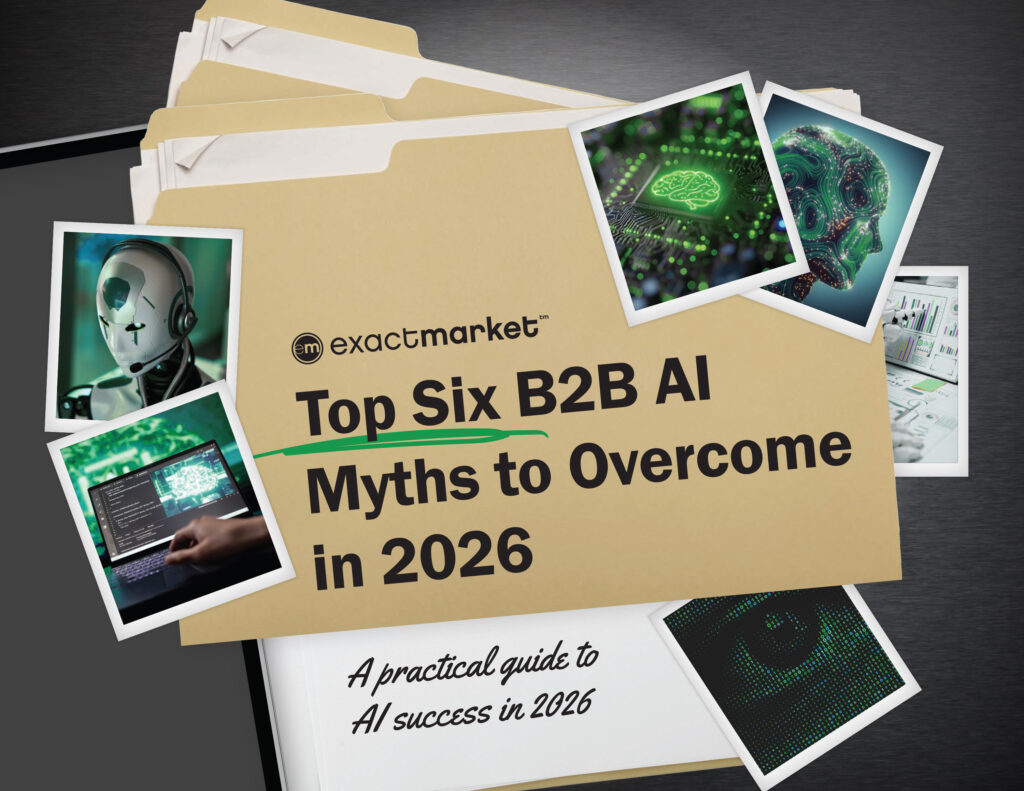
Ai Myths Cover

Artificial intelligence (AI) dominated 2025—from boardroom strategies to campaign brainstorms—and it’s reshaping how every business operates. Across industries, we’ve seen remarkable innovation, but also some recurring assumptions about what AI can (and can’t) do. Like every new wave of technology, AI adoption brings learning curves and course corrections. Our new eBook, Top Six B2B AI

Survival of the Smartest: AI in the App Genome

Em Blog Ai Genome Main Image

The global enterprise software market is expected to reach $280 billion this year, on its way to more than $760 billion by 2034. The real question isn’t how much you’re spending. It’s whether you’re investing in code that ages or code that learns.1 Artificial intelligence (AI) isn’t just about improving enterprise software—it’s about transforming the

AI in the Fast Lane, AI Governance Stuck in Traffic

Em Blog Ai Governance Main Image

Artificial intelligence (AI) is accelerating down the enterprise highway. But according to new research, governance is idling in the slow lane, and the gap is already raising breach costs, fueling shadow AI adoption—when employees use generative AI tools outside official oversight—forcing regulators to wave the caution flag. Global average data breach costs fell in 2025

From Jack-of-All-Trades to Master of One: The Shift to Industry-Specific AI

Em Blog Slm Main Image

The artificial intelligence (AI) revolution began with general-purpose models—the Swiss Army knife of intelligence. Handy, flexible, and able to do a bit of everything, they’ve answered customer questions, written and debugged code, and even nailed a wedding toast or two. Impressive? Absolutely. But when precision and compliance are on the line, these jack-of-all-trades models aren’t

Reduce Cloud AI Sticker Shock with LLM Optimizations

Em Blog Llm Optimization Main Image

As businesses take to large language models (LLMs) to power productivity-saving AI chatbots and content generation, the biggest hurdle is overcoming costs. According to a recent industry survey, enterprise cloud costs rose 30% in 2024, and 72% of IT and financial leaders said cloud costs were becoming unmanageable, all primarily due to AI.1 Pennies per

As Borders Become Data Barriers, Sovereignty Rewrites the Rules of AI Innovation

Em Blog Data Sov Ai

Data fuels our global digital economy. As AI and analytics applications proliferate, the value of critical data continues to rise, along with the urgency to protect it. Governments around the world are responding. Most nations now enforce data sovereignty laws that regulate how digital information is collected, processed, and stored within their borders. The result

The Economics of a Breach Are Changing, and AI Is the Key Variable

Em Blog Ibm Data Report Main Image

We’ve reached a moment where AI is materially changing how breaches happen and how much they cost. IBM’s 2025 Cost of a Data Breach report shows the clearest signal yet: AI-driven security is lowering breach costs through faster containment, while ungoverned AI and shadow tools are quietly driving costs up. The balance between benefit and

Digital Twins in 2025: Amplifying Innovation through AI and Standardization

Em Blog Digital Twin Main Image

Digital twins are virtual replicas of real-world systems that provide organizations with rich tools for experimentation, planning, optimization, and risk mitigation. Enabled by IoT sensors and IT/OT convergence, these simulations mirror their counterparts in a true-to-life fashion, with data flowing in real time from the physical location to its digital representation. Through digital twins, teams

AI’s Double-Edged Impact for GRC: Regulatory Chaos and Operational Perks

Em Blog Ai Ethics Main Image

AI technology is advancing faster than regulations can keep up, putting people and organizations at risk of extensive data collection and AI’s opaque decision-making and unpredictable behavior. This creates both opportunities and challenges for governance, risk, and compliance (GRC) practices. The lag between innovation and regulation is stark: ChatGPT reached 100 million users in two