- July 17 is World Emoji Day, which celebrates the impact of nearly 4,000 digital icons in enhancing digital communication.
- Created in Japan in 1999, emoji were standardized in 2010 by the Unicode Consortium, which approves new emoji every year.
- Understanding some guidelines for their use in the workplace can help avoid embarrassing errors.
- Adding a few tech-focused emoji could help fill some gaps, especially for IT professionals.
It’s remarkable how many ways two simple words—“sounds good”—can be interpreted. If you see that response in an email, you might think your coworker agrees with the new marketing plan you just shared. But then again, maybe the sender is annoyed and being sarcastic.
That type of ambiguity was much more common in the world before the emoji.
Today, that same reply, coupled with a tiny emoji face, can more clearly convey agreement, warmth, excitement, sarcasm, fear, or an array of other emotions, depending on the face’s expression. And of course, users are not limited to faces. What started as a relatively small collection of 176 pixel-art icons has blossomed into nearly 4,000 “official” emojis, as defined in the Unicode Standard.1 That emoji list includes everything from animals, hand expressions, and snacks to weather symbols, sports, flags, and forms of transportation.
With their ability to clarify expression, grab our attention, and make us laugh, these tiny icons are worthy of celebration. And in fact, people have been celebrating World Emoji Day holiday since 2014.
The genesis of the emoji, however, occurred years earlier—not in Silicon Valley but in the mind of a designer employed by a mobile telecom provider.
The Origin Story
Emoji (or “emojis”) were first created in Japan, in 1999. A designer named Shigetaka Kurita, who was working at NTT DoCoMo, one of Japan’s largest mobile carriers, was tasked with improving the company’s mobile internet platform. He noticed that people were using simple text symbols like 🙂 to add emotional context to messages. His idea was simple: Why not build that expressiveness directly into the character set? So, he designed 176 original icons, each one a 12×12 pixel image, covering weather, time, emotions, food, and transport.
Because these icons combined pictures and characters, they were called emoji, which comes from the Japanese words e (picture) and moji (character).
Those original 176 icons were functional, charming, and a little rough around the edges. But they were a hit. Japanese mobile users loved them, and other carriers quickly created their own sets.
Of course, this lack of standardization caused some problems. A smiley face sent from one phone sometimes arrived as a garbled symbol on another. Emoji helped transmit universal expressions and ideas, but their formats were not yet universal.
How Emoji Went Global
The Unicode Consortium attempted to address the standardization problem in 2010. This nonprofit organization, which standardizes text across all computing systems, officially added emoji to its Unicode Standard. The standardization does not guarantee that emoji appears exactly the same across devices and operating systems—the nail polish emoji, for example, looks somewhat different on different operating systems. But it does help ensure that users can produce the (nearly) same emojis on multiple systems.
To simplify the use of these symbols, Apple added an emoji keyboard to iOS in 2011 (first in Japan, then worldwide). Android followed. More than 200 million people had instant, easy access to these new forms of expression.
As use of emoji skyrocketed, designers continued to propose new icons. Today the Unicode Consortium approves new emoji every year through a formal submission process. Anyone can propose a new emoji. Each submission is subjected to a thorough review, then a vote. If a new emoji is approved, it is added into the next Unicode release. Some of the more recent additions? A treasure chest, a landslide, and Bigfoot.
Emoji in the Workplace
Initially, emoji were generally too playful and informal for professional communications. Today, that’s changed. A well-placed emoji in a Slack message, an internal newsletter, or even a client-facing email (depending on the industry and relationship) is widely accepted and often appreciated. It humanizes communication and signals that there is a real person on the other end.
The general rule: Read the room. Or better yet, read the thread. If a team is already communicating with emoji freely, there’s no harm in joining in. If the culture is more formal, following the lead of others is a safer bet.
The Art of Using Emoji Well
Emoji add a new language to communication. And like any language, users should follow a few guidelines to make the most of them—and avoid embarrassing errors. Here are a few suggestions for how to optimize emoji use:
- Use emoji to add tone. Written language strips out the cues like vocal pitch, vocal pace, and facial expression. Emoji help restore some of those queues. Seeing a text with “We need to talk” is alarming. Reading that same phrase, followed by a smiley face, is not.
- Be aware of context. A thumbs up between friends is friendly while a thumbs up from a manager in response to a detailed proposal can feel dismissive. In addition, some cultures might interpret emoji differently. The folded hands emoji might mean “thank you” to a US sender, but in Japan, it might mean a request for forgiveness.
- Remember: less is more. A well-placed single emoji at the end of a sentence adds personality. A wall of 14 emoji in a row adds confusion. Unless you are texting a close friend or posting something intentionally chaotic, restraint tends to land better.
- Keep the platform in mind. Despite the efforts toward standardizing emoji, the same emoji can still render differently on different platforms. The “grinning face” on one platform can look friendly; on another, it might look a little scary.
Why Emoji Matter
Even a few years ago, it was easy to dismiss emoji as trivial, even cutesy, elements from informal digital culture. But linguists, researchers, and communication experts take them seriously. These small symbols represent a rapidly adopted communication system that is crossing language barriers in ways that written words cannot.
A red heart means warmth in almost every culture. A face with tears of joy needs no translation. For a world that communicates across borders and time zones constantly, that kind of shared visual shorthand is genuinely valuable.
So, this June 17, take a moment to appreciate the tiny icons that make your messages warmer, your posts more expressive, and your “sounds good” emails a little less ambiguous.
And if you want to celebrate properly, you know what to do. 🎉
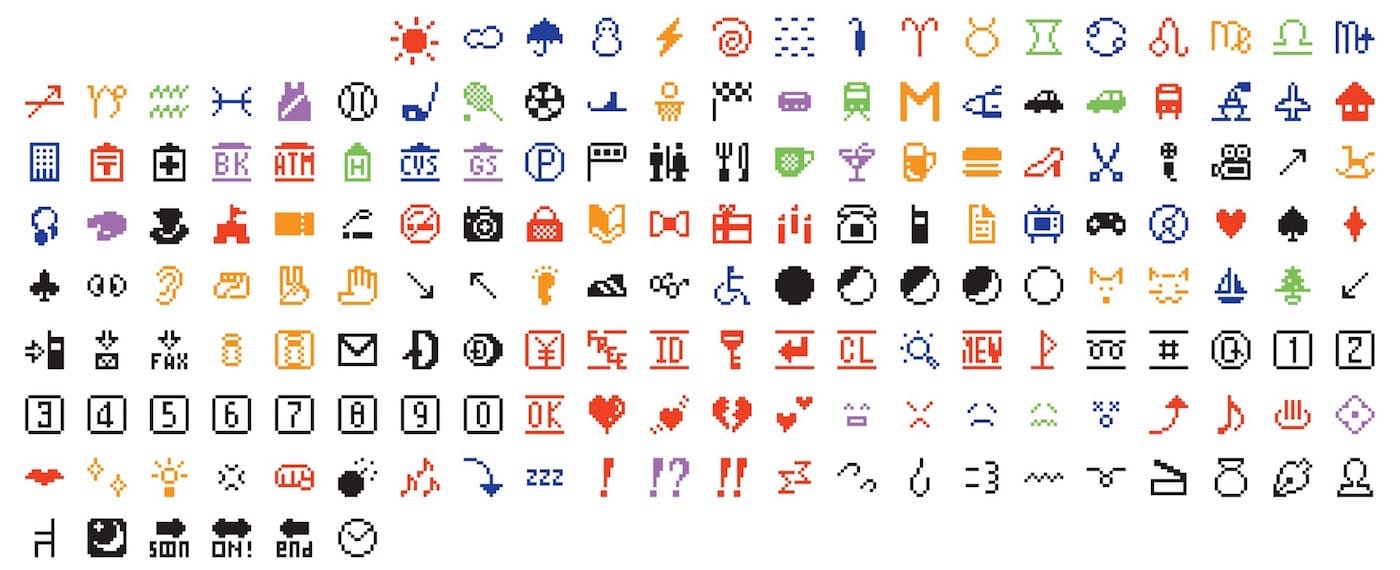
Maybe one day a cyber shield and an AI brain will be in there too. We are manifesting it.
Reach out to learn more about what Exact Market can do for your organization.
A: The first emoji (or “emojis”) were created in 1999 by the Japanese designer Shigetaka Kurita while working for the mobile carrier NTT DoCoMo. He designed a set of 176 original 12×12 pixel icons to add emotional context to text messages. The word “emoji” comes from the Japanese language: e means “picture”; moji means “character.”
A: Initially, different mobile carriers used distinct code to stand for particular emoji, which made it difficult for users to send emoji across platforms. In 2010, the Unicode Consortium standardized emoji for all computing systems. Global adoption increased when Apple and then Android added native emoji keyboards for their mobile operating systems.
A: Yes, but users should be careful of the context. Not all settings are appropriate for the informal expression of emoji, and some emoji carry cultural meanings that might not translate well across global teams.
- Unicode, Full Emoji List, v17.0, accessed June 2026
